Wednesday, January 29, 2014

Butternut Squash Soup

Looking for a great way to warm up this winter? Try this fabulous recipe for homemade butternut squash soup. Not only will this soup leave you feeling warm, it'll also leave you feeling full because it is filled with so many nutrients. Butternut squash is high in antioxidants and fiber and is low in calories and fat. Butternut squash has also been shown to lower risk of heart attacks and strokes, lower blood pressure, prevent birth defects, level out blood sugar, relieve pain and more.

Ingredients
  • 3 cups of butternut squash, peeled, seeded and cubed
  • 1 large red apple, quartered (skins okay)
  • 1 tablespoon of high quality butter of ghee
  • 1/2 onion, sliced
  • 3-4 cloves of garlic, pressed or finely chopped
  • 1/4 cup of brown rice flour (gluten free)
  • 1/4 teaspoon of thyme (and a little extra for garnish)
  • palm full of pink himalayan crystal salt
  • palm full of black pepper
  • 1 1/4 cups of organic chicken broth 
  • Optional ingredients: add some cinnamon, cloves, ginger and/or a jalapeno to spice it up a bit! 

Directions
Steam the butternut squash and apple until soft. While the squash is steaming, saute the onion and garlic in butter until the onion appears clear. Add the remaining ingredients into a high powered blender (i.e. the Vitamix) and blend for 3-4 minutes or until the mixture thickens. Add squash, apple and sauteed onion & garlic into the blender. Add in any of the optional ingredients as well. Blend until smooth. 

Side note: if you do not have a high powered blender that will heat the soup up for you, transfer the ingredients (once pureed) into a pot and warm it up on the stove. 

ENJOY!

Have you tried this recipe? If so, leave your comments below and let me know what you think!


Until next time...stay rooted!
Joelle


Friday, January 17, 2014

Finding the Balance: Omega 3 & Omega 6

Salmon is a great source of
Omega 3's - an essential fatty acid
Do you know just how essential the Omega 3 & Omega 6 balance is for you and the health of your unborn baby? Due to our SAD (Standard American Diet) habits, most Americans have extremely high levels of Omega 6's and very low levels of Omega 3's.

So, I'm deficient in Omega 3's and drowning in Omega 6's....what next? Look at your diet!

Omega 6's are heavily present in our diets today in the form of vegetable oils and seed oils (soybean, corn, grapeseed, etc.) which we get from fast food, eating out at {most} restaurants, and packaged and processed foods.

Omega 3's are found in flaxseed oils, chia seeds, some leafy green vegetables, and in oily, cold-water fish such as herring, tuna, salmon, and algae.

What is an Essential Fatty Acid anyhow?

Essential Fatty Acids are fats that are essential for human health and cannot be constructed within the body: they must be obtained from food or supplementation. They are a principle source of energy and structure our cell membranes. Each of the 60-90 TRILLION cells in the human body is encased and protected by Essential Fatty Acids!

Do both men and women need these Essential Fatty Acids?
 
Yes! The Omega 3 & Omega 6 balance is important for men and women both. With that said, it is especially important for females.                               
 
Why?

 "A female child must store this DHA at the same time that she requires substantial amounts of DHA to support her own growth and development. Because she must allocate some of her {limited dietary} Omega 3's to storing DHA for her future children, there is competition between her need for DHA for her own body and brain now and her need to store DHA for future reproduction." In addtion, "stored maternal fat is selectively used to support the development of the fetal and infant brain – via the placenta and breast milk – females must prepare for these demands by storing DHA in fat at a much higher rate than males during their childhood and adolescence while their brain and bodies are still growing."

In summary: We need more Omega 3's - which we get through food or supplements - and less Omega 6's. The amount of DHA that moms have stored up will - without a doubt - dictate the development of their baby.
 
Looking for a great way to supplement and ensure your body finds balance? Check out www.nordicnaturals.com. They have products for men, women, children and babies and their products are top quality!

Questions? Head to my website www.yinRoot.com and connect with me.
 
 
Until next time....stay rooted!  

Thursday, January 2, 2014

No Bake Breakfast Bars

Thanks to my dear friends over at Indy Vegan Family, Wade and Jenny Wingler, the hubs and I can enjoy some yummy - and quite healthy - breakfast bars that are SUPER easy to make. These are a great on-the-go breakfast bar and are a great alternative to snack on when you have a serious sweet tooth! 

Side note: we've tweaked the original Indy Vegan Family recipe just slightly to better suit the needs of our {taste} buds. 

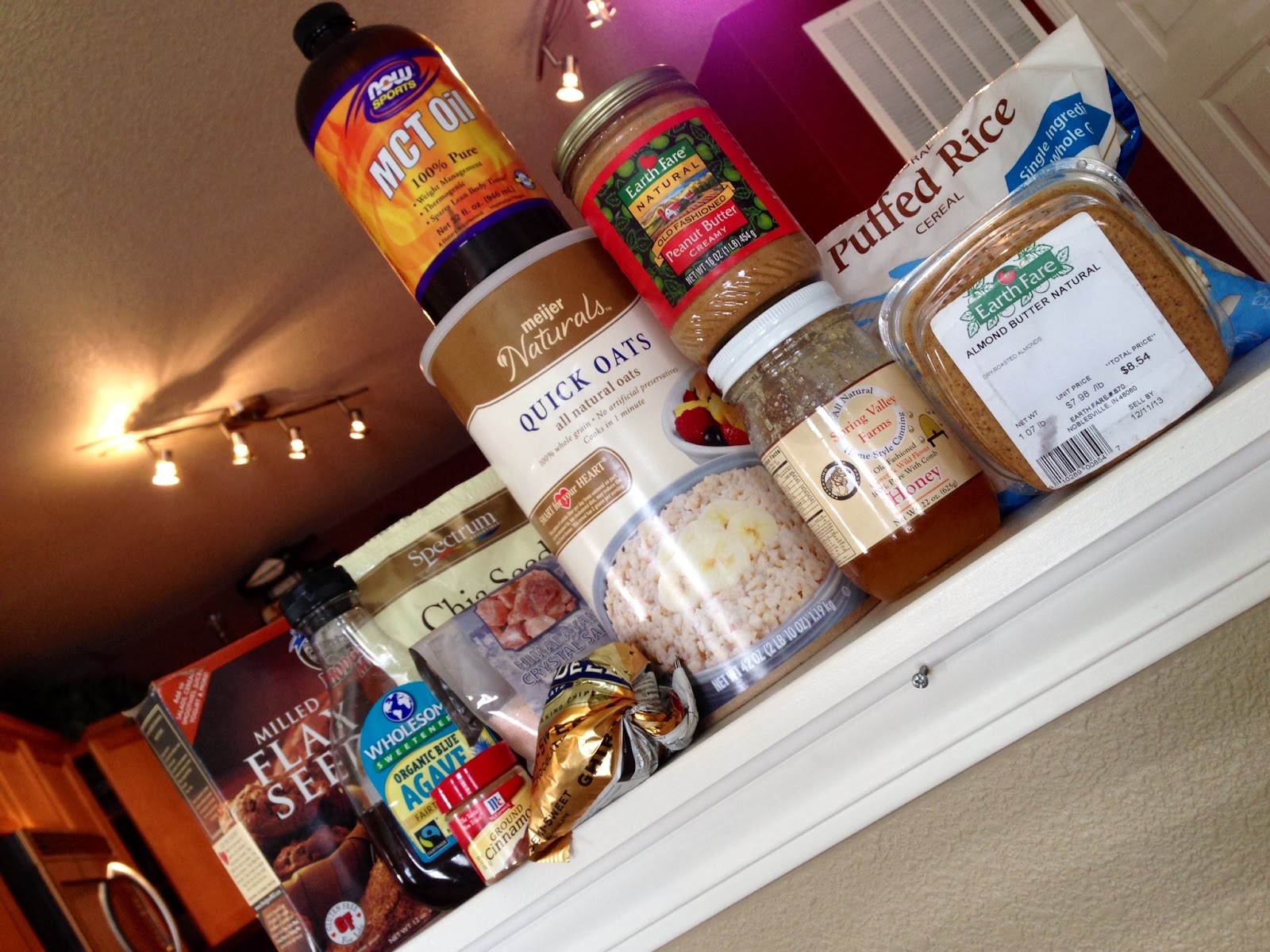
Oh, and sorry for the terrible photos. I just snapped these real quick with my iphone camera so they're not the best quality. 

Ingredients needed:
  • 2 cups of uncooked quick oats
  • 1 1/2 cups of puffed rice 
  • 2 tablespoons of milled flax seeds 
  • 3 tablespoons of chia seeds
  • 2 teaspoons of pink himalayan crystal salt 
  • 1/2 cup of organic agave syrup
  • 2 teaspoons of locally produced honey 
  • 1 cup of peanut butter 
  • 2 tablespoons of almond butter
  • 2 teaspoons of cinnamon 
  • 1/2 cup of MCT oil (coconut oil) 
  • 1/2 cup of organic dark chocolate chips 
Directions: 

Mix dry ingredients together first (oats, puffed rice, flax seeds, chia seeds, salt and chocolate chips) . Then, add in the remaining ingredients and stir until sticky and starting to form in a clump. 


Pour the mixture into a 9 x 13 pan (it makes it easier to get the mixture out of the pan to cut) and press evenly filling half or three-fourths of the pan. Freeze for 2 hours. When frozen, remove from pan, cut into  squares and wrap in foil or place in glass storage containers and put back into freezer until ready to eat. 
FYI...If the bars sit out for too long, they will become mushy. 


Enjoy, friends! 

Until next time....stay rooted!
Joelle

Saturday, December 28, 2013

Corporate Genealogy & The Illusion of Choice

Do you know where the food is coming from that is {supposed to be} nourishing your body? When I first start working with clients, I always have a conversation with them around this topic. 

Over the holidays I was talking with my grandmother about her experience owning and managing a butcher store in the late 1930's. This was a very small, counter service store that was staffed by just two or three employees (including my grandma). Customers would call in and place their order and then a delivery guy would take them their canned goods and butchered meats. The food that was provided to folks was fresh and they knew where their food was coming from. Grandma even shared with me the first time she had to butcher one of their chickens, but don't worry...I'll spare you the details.    

Unfortunately, their small store was quickly taken over and closed after only eight months of being in business. 

Why? 

Chain stores started to become a dominant force which overtook these small butcher and canned good grocers. In 1926, Charles Merrill, of Merrill Lynch merged and bought out several chain operations which then started the boom of the larger supermarkets in the 1930's and 1940's.  Growth by merger became common and led to numerous antitrust actions and attempts to tax these smaller grocers out of existence. 

Although these large supermarkets were (and still are in some cases) a benefit to Americans, this is also what has led us down the path to living such an unhealthy lifestyle. 

When I came across the diagram to the right, I began doing my own research and reading more about the importance of what I now call corporate genealogy: the tracing and lineage of American {food} corporations and businesses. 


     The illusion of choice: Ten mega corporations control the output
of almost everything that you buy. 
To live a more well-nourished lifestyle, we must start by caring more about where our food and the products we use come from. 

How do we do this?

There are a lot of things that you can do but here is a list that you can use to get yourself started: 
  • Begin gardening: big or small, it doesn't matter, just start doing it. If you've never gardened before, you might start with a small herb garden. 
  • Shop at Farmer's Markets: go to your local farmer's market to purchase locally grown produce from farmers in your community. 
  •  Join a CSA (Community Supported Agriculture): learn more about CSA's in your community at Local Harvest: real food, real farmers, real community.
  • Purchase a share of a cow, pig or chicken: do some research on local farmers in your area and learn about the option to buy grass-fed, free-range and pasture-raised meat and dairy products in bulk. 
    • Tyner Pond Farm in Indianapolis is one of my favorite farms in our community! 
  • Start using coconut oil: check out these great tips and learn how you can weed out some of your other health and beauty products and start using coconut oil as a safer alternative. 

Remember that this is a lifestyle change. Take one step at a time and embrace the journey to finding your best you! 


Until next time....stay rooted!
Joelle


Sources:
http://www.groceteria.com/about/a-quick-history-of-the-supermarket/

Sunday, December 15, 2013

So, What is a Health Coach Anyway?

When I tell people that I am going to school to become a Holistic Health Coach, people often have questions: What is a Health Coach? Where are you going to school? How are you different than a Nutritionist or a Dietitian? What can Health Coaches do? What do you plan to do when you become a Health Coach? 

So, below I've answered some of these questions for you in hopes that I can clarify just what it is that I am doing and where exactly I am hoping to go.

First and foremost, it is important to me that people know and understand that I am not a Registered Dietitian (RD) or a Nutritionist. I am a Health Coach. What is the difference you ask? Well...let me explain.


Registered Dietitians and Nutritionists receive different credentials than Health Coaches and they learn a more scientific approach to nutritional education. RDs and Nutritionists work with their clients solely on food and nutrition; whereas, Health Coaches support their clients with issues and challenges related to diet AND lifestyle. Health Coaches look at the person as a whole and consider all aspects of a persons life in order to assist them in achieving wellness. This includes areas such as their relationships, career, spiritual life and exercise.  It's about way more than just the food we eat!


So, where are you going to school?

I chose to obtain my certification through the Institute for Integrative Nutrition and will officially graduate in February of 2014. I really like IIN because they have such a diverse student body. IINs student body consists of individuals from Australia to Alaska and PhDs to stay-at-home moms. In addition, I was attracted to the opportunity to study over one hundred dietary theories, practical lifestyle management techniques, and innovative coaching methods with some of the world's top health and wellness experts. These folks include Dr. Andrew Weil, Director of the Arizona Center for Integrative Medicine; Dr. Deepak Chopra, leader in the field of mind-body medicine; Dr. David Katz, Director of Yale University's Prevention Research Center; Dr. Walter Willett, Chair of Nutrition at Harvard Universiy; Geneen Roth, bestselling author and expert on emotional eating; and many other leading researchers and nutrition authorities. 

What does a Health Coach do? 

In short, the possibilities are limitless. Some students build their own private practice doing health coaching, others work for already established health & wellness companies and some are writing books and promoting their own products. Everyone has a different path but we all have the same goal in mind - improving the health and happiness of people around the world. 

What are your plans for after graduation? 

it is my intent to become board certified through the AADP: American Association for Drugless Practitioners. My business, yinRoot, has already been established and I've started seeing clients and building partnerships with others in the field of holistic health. My services include one-on-one health coaching, small group coaching, family coaching and educational seminars for large groups. You can learn more about each of these programs here.


If you are interested in learning more about yinRoot and how health coaching can be of benefit to you, please contact me today for a free 50-minutue initial health history consultation!


Until next time....stay rooted!
Joelle

Tuesday, December 10, 2013

Welcome!


Welcome to my blog...I'm so glad you're here!

What a surreal feeling. I cannot believe that I am actually writing my FIRST blog post for my very own health and wellness website, yinRoot. I am beyond excited! I look forward to sharing with you my passion for living healthy and loving life. After all, we all deserve to live the life we love, right?!

So, why yinRoot?

One of our first homework assignments at IIN was to write down words that came to mind when we thought about our future in the health and wellness industry. This was my list: knowledgeable, rooted, balanced, transformed, wholesome, freedom. When I thought about being healthy, I thought: it’s all about getting back to your roots. It's about finding your roots, becoming balanced and enjoying the journey.

yinRoot = en route.

Your route and journey to becoming healthy and finding balance will take time and it will require a lot of patience. Sickness, disease and cancer are not created over night, folks. It is the result of years and years of unhealthy habits and in order to change the outcome, we must take one step at a time in the other direction. Patience is {indeed} a virtue. Are you ready?

Join me on this journey to finding your best you!
 
Until next time....stay rooted!
Joelle